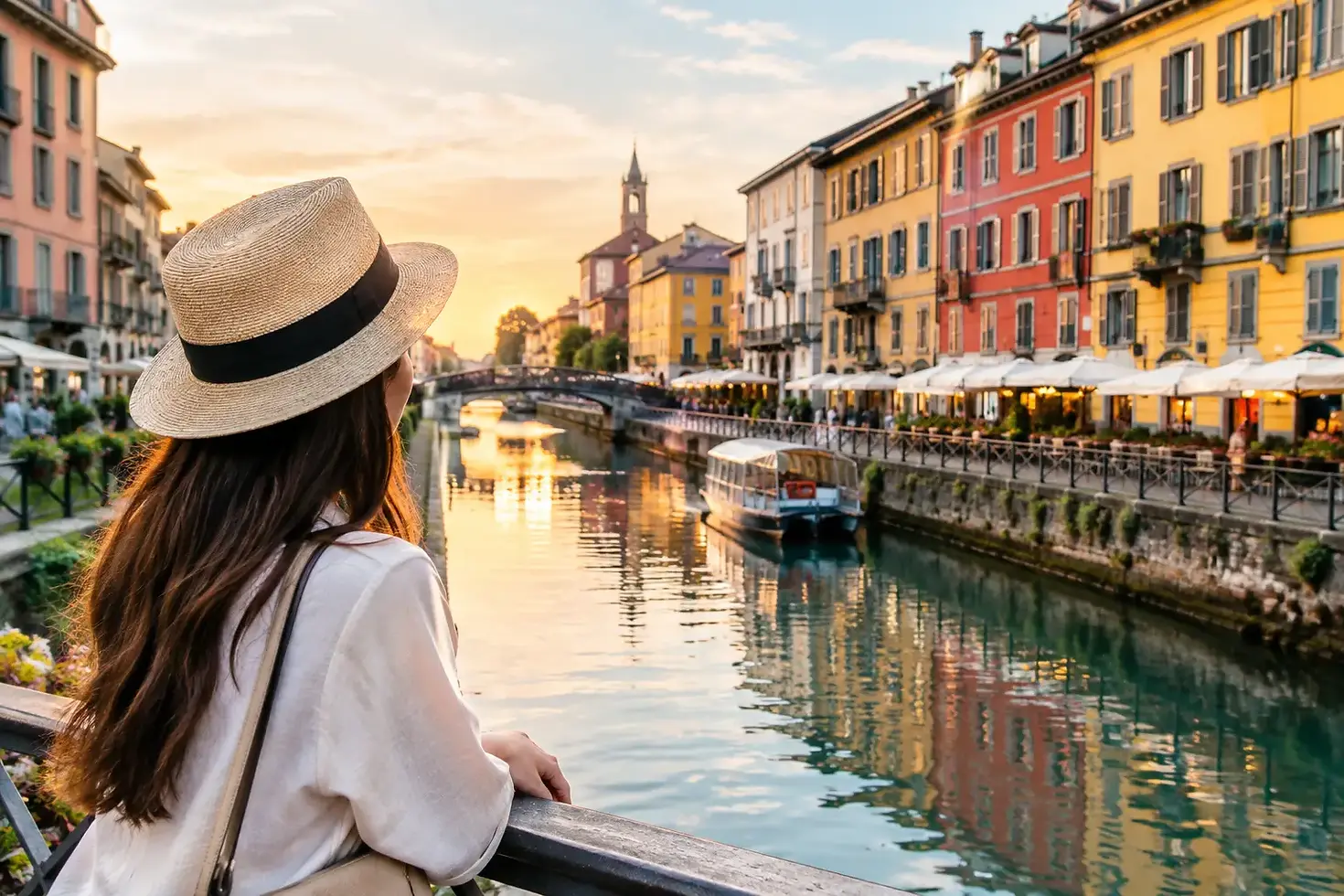
How to Tour Milan Canals With Style and Substance
Milan’s canals do not announce themselves with Venetian grandeur. They appear almost discreetly: a line of water beyond the old city, weathered railings, restored courtyard houses, artists’ studios, wine bars, and the lingering sense that this was once a working gateway to the world. Knowing how to tour Milan canals means approaching them not as a single attraction, but as a living district where engineering, trade, design, and evening ritual meet.
For travelers who have seen the Duomo, lingered before The Last Supper, and admired the polished façades of the fashion district, the Navigli offer a more intimate Milan. Give them time. Their charm is most apparent when you move at a measured pace and let the city’s older rhythm emerge.
Begin at Darsena, Milan’s Historic Harbor
Start at Darsena, the former harbor at the meeting point of the city’s most famous waterways. Reimagined in recent years as a public waterfront, it is the natural threshold to the Navigli district. In the 15th century, this basin received goods arriving from Lombardy and beyond, including the marble used for Milan Cathedral. Today, its broad waters reflect apartment buildings, market stalls, and passing life rather than cargo barges.
Arrive in late morning if you prefer space to observe the architecture and the changing light. This is also the best time to understand the layout before the aperitivo crowds gather. From Darsena, the two principal canals extend outward: Naviglio Grande to the west and Naviglio Pavese to the south.
Do not expect a grand network of open waterways across central Milan. Most of the historic canal system was covered during the 20th century as the city modernized. What remains is all the more evocative because it reveals a chapter of Milan many visitors never see.
How to Tour Milan Canals by Foot, Boat, and Appetite
The most satisfying itinerary combines a walk with a short boat experience when seasonal schedules and water conditions allow. Boat rides tend to operate on limited routes, often around Naviglio Grande and Darsena, and their availability can vary by day, season, weather, and canal maintenance. Treat the boat as one perspective rather than the entire experience.
On the water, you notice details that disappear from street level: low bridges, garden walls, inner courtyards, old washhouses, and the unusual proximity between homes and canal. A guided cruise adds context to the view, especially for those curious about Leonardo da Vinci’s connection to Lombard hydraulic engineering. Leonardo worked in Milan under Ludovico Sforza and studied systems of locks and water management, though the stories attached to every stretch of canal deserve careful interpretation rather than easy legend.
By foot, begin along Alzaia Naviglio Grande, following the canal west from Darsena. This is the more picturesque of the two major routes, with a particularly rich mix of historic buildings, independent shops, galleries, and small cafés. The atmosphere can become lively, even crowded, after sunset. Morning or early afternoon offers a calmer, more architectural experience.
Return toward Darsena and continue along Ripa di Porta Ticinese, then toward Naviglio Pavese. This second canal feels less theatrical and more residential in places. It rewards travelers who prefer an unhurried walk, a quiet table, or a glimpse of Milan beyond its most photographed scenes.
A full canal visit usually takes two to four hours, depending on whether you include a cruise, lunch, aperitivo, museum stop, or private guide. It is a fine choice for the afternoon after a morning of major monuments, when you want the city to soften around you.
Look Beyond the Lively Waterfront
The Navigli are celebrated for nightlife, but their deeper appeal lies in the layers just behind the waterfront. Step into a courtyard when it is visibly open and welcoming. Look for traces of the old case di ringhiera, the traditional Milanese apartment buildings organized around communal balconies. Notice how workshops, warehouses, and modest homes have been adapted into creative spaces without entirely losing their industrial character.
Near the canal, Vicolo dei Lavandai is often included on walking itineraries. Its stone wash area recalls the laundresses who once worked here, using canal water and simple wooden structures. It is a small fragment of social history, easily overlooked when the lane is busy, yet it offers a tangible connection to the working lives that shaped this district.
For a richer cultural detour, consider the Church of San Cristoforo sul Naviglio, farther west along Naviglio Grande. Its paired medieval churches and humble brick exterior feel far removed from the spectacle of central Milan. Reaching it takes more time, so it suits travelers who are comfortable walking or using a taxi to extend the route. The reward is a quieter, more atmospheric perspective on the canal’s former edge.
Choose the Right Time for Your Milan Canal Tour
Timing changes the experience completely. Late afternoon is the classic choice: the sun lowers over the water, façades take on warmer color, and the city begins its beloved aperitivo hour. It is elegant and sociable, particularly for couples and small groups, but it is not tranquil. Reservations are wise if you have a particular restaurant or waterside table in mind.
For photography, reflection, and a more local mood, choose a weekday morning. Shopkeepers are opening, delivery bicycles pass along the towpaths, and the canal surface is often still. The district feels less like an evening destination and more like a historic Milanese neighborhood.
Winter brings a different kind of beauty. The trees are bare, the light is silver, and the crowds diminish. Some boat services may be reduced, but the walking experience can be wonderfully intimate. In warmer months, especially on weekends, the Navigli are at their most animated and their most congested. Neither is inherently better. It depends on whether you want serenity, sociability, or a balance of both.
Make Aperitivo Part of the Route, Not the Entire Plan
Aperitivo belongs to Milan’s social culture, and the canals are one of its most popular stages. A well-made drink, a small plate, and a seat facing the water can be a lovely pause. Still, the best way to experience the Navigli is not to spend the entire visit moving from one crowded bar to the next.
Choose one place with care, ideally after you have walked, listened, and looked. Consider a classic Milanese cocktail, a glass of Franciacorta, or a thoughtful selection of Lombard wines. If dinner follows, seek a restaurant where the menu has a clear identity rather than simply the loudest terrace. The canal district can offer excellent regional cooking, but quality varies, especially in the most heavily trafficked stretches.
Travelers with a particular interest in food may prefer a guided tasting that brings together the neighborhood’s history with a few well-chosen addresses. It turns an evening habit into a cultural encounter and removes the uncertainty of choosing among many similar-looking options.
Practical Details That Preserve the Pleasure
Wear comfortable shoes. The canal paths are generally easy to walk, but cobblestones, uneven edges, and frequent stops make polished footwear less practical than it looks. Bring a light layer after sunset, even in warmer seasons, when the water and evening breeze can cool the air.
Public transportation makes Darsena and the Navigli accessible, while taxis are useful if you are arriving dressed for dinner or extending your route to San Cristoforo. If mobility is a concern, plan the route in advance: some waterfront areas are smooth and accessible, while older lanes and bridges can be less forgiving.
Above all, book boat experiences and private guides ahead during peak travel periods. A curated private itinerary can make the difference between seeing a canal and understanding its role in Milan’s imagination. With the right storyteller, a former commercial artery becomes a passage through centuries of ambition, craftsmanship, and urban reinvention.
For guests seeking a more personal occasion, MI EXPERIENCE can shape a Made-to-Order Navigli experience around architecture, art, food, photography, or a private celebration. The most memorable version is rarely the busiest one. It is the one paced for your interests, with room for a hidden courtyard, a beautiful table, and that quiet moment when the water catches Milan’s fading light.
Commenti